If a person has the experience of dealing with loose dentures there are other options. Implants can be attached to an existing denture and be converted to an implant denture. Implant dentures snap into areas of the mouth allowing the denture to fit better. Please click on the following link, written by Dr. Urban, to read more about this procedure.
I hate My Dentures! Fixing Loose Dentures
Thursday, June 11, 2015


Tuesday, August 5, 2014
We Love Birthday Celebrations! (At Douglas Urban DDS, Cerritos Southcoast Dental, Dentist in Cerritos)
Not too long ago Shelley N. had a birthday. As usual we all joined in the celebration. Shelley works as an assistant with Dr. Urban as well a receptionist at the front desk. All of us enjoy celebrating special occasions and this one was no different. We had lunch together, which is a rare occasion, and completely enjoyed the day.

The above photo is of Shelley N. and her delicious birthday cake.

Douglas Urban, DDS

Left to Right
Shelley, Dona and Teri
Shelley, Dona and Teri

Lilly and Shelley

Bonnie and Allison
Thursday, July 24, 2014
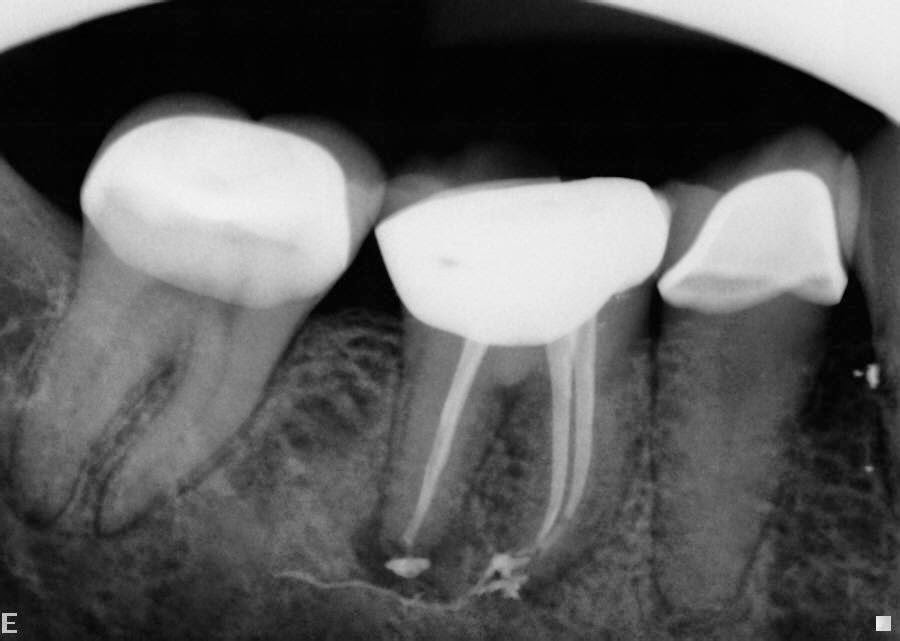
Dr. Urban on Today’s Dentistry / What is a Root Canal? #What is a root canal?
I
sure get a little nervous when my doctor combines treatments and canals in the
same sentence. Justifiably my patients react the same way when I recommend a
root canal treatment.
When
it becomes impossible to restore a severely decayed or fractured tooth merely
with a filling or crown I have to recommend root canal therapy or extraction. I
still get people fidgeting and wincing at the thought.
The
vast majority of root canal treatments are successful and are provided with
minimal discomfort. Just like the TV news and printed newspapers we only hear
about tragic events, crumbling economies and horrible acts done by man. In
other words no news is good news. So the uneventful successful root canal fillings
go by unnoticed.
There
are a few failures. It ranges between 2% to 5%. Some teeth are just untreatable
or not worth the time and expense due to predictable unfavorable outcomes.
Root canal myths abound. Root canal treatments remove the
roots, pulling a tooth is better than a root canal filling, pregnant women
can’t have root canals, root canals cause illness, and if it doesn’t hurt don’t
fix it with a root canal. These are just myths. Let me explain.
Anatomically,
the teeth are formed with a hard outer enamel shell covering a less dense
dentin core. This core protects the pulp of the tooth which has a nerve and
blood supply. When trauma or bacterial invasion penetrates through the enamel
and into the dentin core the living tissues of the pulp will die off leaking
out into the bone through the end of the root and causing an abscess to form.
Pain may not be present when the dentist
examines the x-rays and finds a latent abscess or dead tooth. The tooth is best
treated before a severely painful infection develops. Infections will
compromise pain control and the outcome of the treatment. Do not delay.
Root
canal fillings obliterate the space that was once occupied by the nerve. It
takes a lot of clinical know-how and patience to place these fillings. Once
placed the fillings need protection from the mouth fluids with a restoration
like a crown or sealed filling.
Root
canal fillings can be placed during pregnancy without any special precautions.
Also, there is no evidence to suggest that root canal treatments will develop
into an illness. Save your teeth if you
can. In the long run it is far easier the alternatives.
Do
all crowns need root canal fillings first? No. Only about 20% of crowned teeth
will need root canal fillings later on in normal situations. Do most root canal
fillings need crowns? Yes. Root canal filled teeth become brittle and may
fracture later so they require full coverage of the chewing surface. Once
properly restored the tooth should perform like a normal tooth for a long time.
For answers to your dental questions, contact
Douglas Urban DDS
Cerritos Southcoast Dental
(562)924-1523.
Or visit our website at www.DrDouglasUrban.com
For answers to your dental questions, contact
Douglas Urban DDS
Cerritos Southcoast Dental
(562)924-1523.
Or visit our website at www.DrDouglasUrban.com
Wednesday, May 28, 2014
How often should I see the dentist or hygienist?

TV advertisements or commercials do not always give the right information. How often we visit our dentist or hygienist is one of them. I once heard an advertisement say that we should visit the dentist once or twice a year and that’s enough. Well, that’s not true for everyone!
In
general, children and adults with a healthy mouth should see their dentist at
least two times a year. For those who
have high decay (cavity) risk and people with periodontitis, they need to see
the dentist more often. People who have
been diagnosed with periodontal disease usually need a periodontal therapy
treatment (scaling & root planing).
After its completion, periodontal maintenance is recommended in a 3 or 4
month recall interval. This is
imperative to help maintain a healthy status.
A recall interval is suggested based on the patient’s home care. Better home care could mean fewer visits with
the hygienist. People with high decay rate
should also see the dentist more often.
Radiographs are taken once a year, sometimes twice. Decay can start fast and spread quickly,
depending on the part of the tooth. The
root of the tooth has no enamel so the decay can get big much faster. With this in mind, the
dentist/hygienist can give preventive treatments to those in- need: in-office
fluoride treatments, oral hygiene instructions, prescribing pastes that would
help remineralize decalcifying tooth surfaces, and nutritional counseling.
Visiting
the dentist is very important. It is
essential to either maintain or attain a healthy mouth.
Monday, May 5, 2014
Why More Frequent Cleanings After Periodontal Disease Treatment? by Douglas Urban, DDS
I just had my periodontal disease fixed so why do I need more frequent cleanings?
This question is often asked after periodontal treatment. Frequent periodontal cleanings keep the areas under the gums free of bacteria and biofilm. The dental hygienist is able to retreat any areas before damage occurs. Let me explain.
Periodontal disease is painless and once bone loss becomes significant it may be too late to do anything but remove the diseased tooth. For this reason it is wise to treat the early stages before bone loss is irreversible. Periodontal disease is most often not curable, but it can be managed to prevent further bone loss and loose teeth.
Basically, periodontal disease is a condition where specific toxic bacterial populations invade the space between the teeth and gums. (The bad breath odor of periodontitis is very noticeable and quite specific. Usually a clinician can make a preliminary diagnosis just from the smell.) This bacterial invasion causes damage to the surrounding tissues as a result of the body’s inflammatory response and the lethal effects of bacteria on living tissue. Even after treatment the cleansed pockets around each tooth remain exposed to new armies of bacteria to re-populate the original spaces between the teeth and gums. Home cleanings are not always able to remove the toxic debris in these areas. Your dental hygienist has the special tools and skills maintain healing gums.
Bone heals slowly. Healing bone is very sensitive to the inflammatory processes that accompany periodontal disease. Bone will not “fill in” or grow to a healthy state as long as the disease process is allowed to proceed unchecked. Once management of the disease is stabilized cleaning intervals can be changed according to each person’s recovery rate.
This question is often asked after periodontal treatment. Frequent periodontal cleanings keep the areas under the gums free of bacteria and biofilm. The dental hygienist is able to retreat any areas before damage occurs. Let me explain.
Periodontal disease is painless and once bone loss becomes significant it may be too late to do anything but remove the diseased tooth. For this reason it is wise to treat the early stages before bone loss is irreversible. Periodontal disease is most often not curable, but it can be managed to prevent further bone loss and loose teeth.
Basically, periodontal disease is a condition where specific toxic bacterial populations invade the space between the teeth and gums. (The bad breath odor of periodontitis is very noticeable and quite specific. Usually a clinician can make a preliminary diagnosis just from the smell.) This bacterial invasion causes damage to the surrounding tissues as a result of the body’s inflammatory response and the lethal effects of bacteria on living tissue. Even after treatment the cleansed pockets around each tooth remain exposed to new armies of bacteria to re-populate the original spaces between the teeth and gums. Home cleanings are not always able to remove the toxic debris in these areas. Your dental hygienist has the special tools and skills maintain healing gums.
Bone heals slowly. Healing bone is very sensitive to the inflammatory processes that accompany periodontal disease. Bone will not “fill in” or grow to a healthy state as long as the disease process is allowed to proceed unchecked. Once management of the disease is stabilized cleaning intervals can be changed according to each person’s recovery rate.
Wednesday, April 9, 2014
Why Dentists Use Mini Implants by Douglas Urban, DDS


By now most everyone is aware of dental implants and their place in dentistry. Titanium implants are used throughout the skeletal system to replace hips, knees, etc. In dentistry large body titanium implants are now the number one alternative for replacing extracted teeth. However, large body implant dentistry is a significant financial investment and many people choose other alternatives like fixed bridges, removable bridges, or just leaving the gaping holes unrestored (what a shame) for financial reasons.
Another class of implants is the small diameter (about a tenth of an inch) or mini implant. How and why are mini implants used in dentistry? For years these implants have been used in narrow spaces too small for standard sized implants, other anatomic restrictions, to retain removable bridges and dentures, or for cost savings. I will focus on denture appliance retention and cost savings.
Mini implants are excellent for keeping dentures and partial dentures from flopping around in the mouth. They eliminate the need for adhesives while allowing the denture to literally snap onto the implant attachment. The denture appliance stays put until it is removed and cleaned. Sometimes mini implants are used as temporary stabilizing anchors during prolonged dental treatments or orthodontic correction. They can be removed with quick healing of the implant site.
Mini implants are about half the cost of the larger diameter implants and can be placed by most trained dentists in one visit. Often the denture can be immediately attached to the implants. How are they placed and what should I expect afterword’s?
Implants are placed after carefully planning the proposed implant sites. Although one is wide awake the area is locally anesthetized (like for fillings) and pilot holes placed. The receptor area usually has no feeling after the gums are numbed. The implants are directly threaded into place, placement angles confirmed, and the attachments placed on the implants. Since I do not peel away the gum tissue there is little soft tissue invasion sutures are not needed. The gums around the implants will be tender for a day or two until healing begins. Tylenol or Advil may be taken.
If the implants are secure enough your dentist will be able to convert your “removable denture” into a “retained denture” at the same time. This is a wonderful choice for people unable to afford fixed implant/bridgework, elderly or medically compromised individuals, and younger active denture wearers who like to scuba dive or surf.
Tuesday, March 4, 2014
ROOT DECAY by Dona Fujioka, RDH

Dona is one of our three hygienists. She has been here since 1996.
Have you noticed any discoloration
of your teeth along the gumline? Have
you felt any gumline sensitivity? These
are some of the signs that may tell you
that you have a cavity along the gumline.
Caries along the gumline are prevalent with people who have gumline
recession. Recession exposes the root
surfaces, which is covered with cementum.
Cementum is more vulnerable to cavities because it has less mineral
content and more soluble. Roots have no enamel covering, therefore, making it
more susceptible to cavities.
There are several risk factors for
root decay. One is xerostomia or dry
mouth. Dry mouth causes a higher risk
for periodontal disease and cavities.
Normal saliva helps protect our oral health. Without saliva, the mouth is lacking the natural
enzymes that is necessary to help neutralize the pH in the mouth. Some signs and symptoms of xerostomia are dry
burning mouth and throat, difficulty swallowing, and dry, cracking lips. Dry mouth is a common side effect of taking
certain medications and there are over 500 medications with xerogenic side
effect. Another risk factor is root
exposure due to loss of gingival tissue attachment from periodontal disease,
abrasion due to hard brushing, and recession caused by aging. The root becomes vulnerable to bacteria and
demineralization once the surface of the root is exposed. Physical limitations is also a risk
factor. Ineffective oral hygiene results
in increase plaque accumulation and tartar build-up.
Root caries can be prevented through
thorough examination and patient assessment.
Through implementation of chemotherapeutic aids, nutritional counseling,
oral hygiene instructions and patient
education, risk for root decay can be reduced.
Prescription fluoride paste, in-office fluoride application and
remineralizing products that contain calcium phosphate are some of the products
recommended to prevent decay. Chewing gum with xylitol (as its main
ingredient), saliva substitutes (such as gels or sprays) and sugarless candies
are some strategies to help stimulate salivary flow for those experiencing
xerostomia. With all these preventive
methods, progression of current root decay, or development of new lesions can
be delayed.
Subscribe to:
Posts (Atom)

